

Studies show that having the right mindset—a growth mindset—helps students earn better grades, graduate faster, and achieve more success in life.
A growth mindset means knowing that you can get better at anything if you work hard enough, even things that seem hard at first. A fixed mindset means believing that you were born with a certain level of talent, and there’s not much you can do to change it.
A student with a growth mindset views challenges as a chance to grow and improve their skills. They’ll find new ways of doing things, and can persist through difficult times. They’re tenacious in the face of academic setbacks.
In contrast, a student with a fixed mindset views challenges as a sign that they’re bad at something. They might make statements like, “I’m not a math person,” rather than learning to overcome their obstacles.
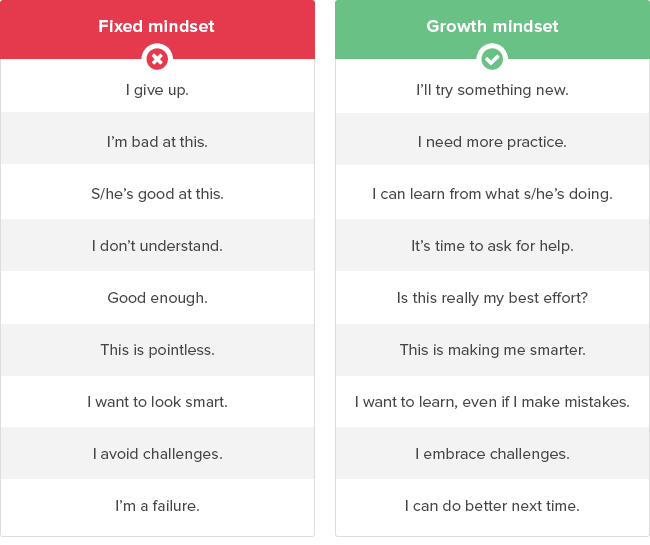
The concepts behind a growth mindset might seem obvious, but when a student is struggling, it can be easy to fall into a fixed mindset and give up.
The good news is: Mindsets can change. That's where you come in.


A growth mindset is more than an attitude. It physically changes your brain.
Science has shown that practice makes your brain stronger. When you perform an activity, like riding a bike, your brain sends signals between neurons. The more you ride your bike, the stronger the connections between those neurons become, and the better you get at riding your bike.
A growth mindset motivates you to keep working hard, strengthening the connections in your brain–just like every workout strengthens your muscles.
GetSet uses proven techniques for developing a growth mindset.
GetSet’s approach is based on decades of academic research, including a landmark study at the University of Texas at Austin. Our exercises were developed in partnership with some of the nation’s leading experts in education psychology.
Using GetSet will help your students tackle whatever challenges they face in college and beyond.
Students with a growth mindset...
“Earn higher grades.”
“Bounce back from setbacks more quickly.”
“Care more about feedback they are given.”
“Are more likely to take advanced classes.”